Balham The Bedford clearance services explained
Posted on 28/08/2026
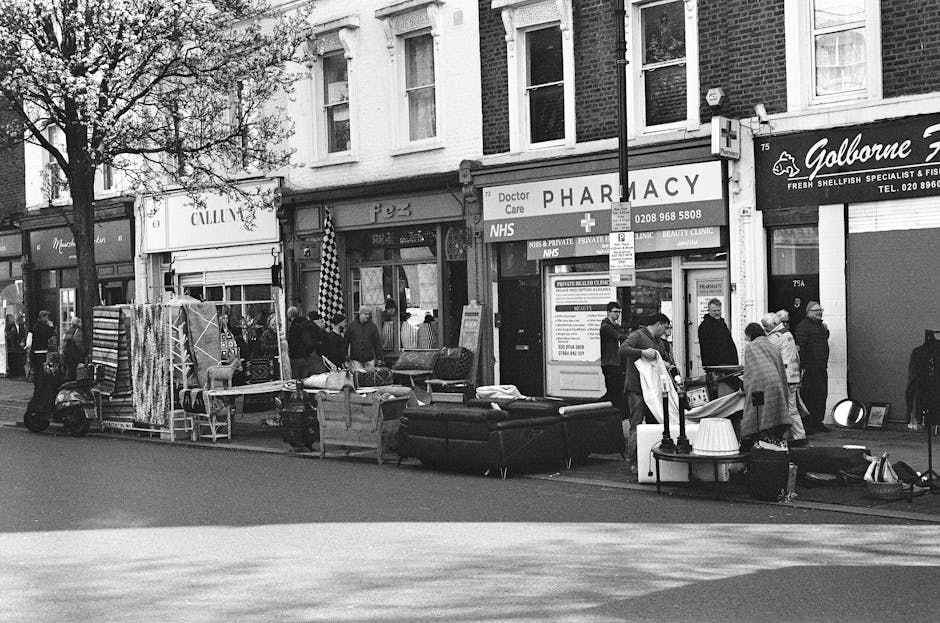
If you've found yourself staring at a room, a flat, or even a whole property near The Bedford and thinking, "Right, where do I even start?", you're in the right place. Balham The Bedford clearance services explained is exactly what this article sets out to do: break down how local clearance works, what to expect, who it suits, and how to avoid the usual headaches. Whether you're dealing with furniture, household clutter, builders' leftovers, or a more sensitive clear-out, the process is often simpler than people fear. Still, there are a few details worth getting right. A few, actually.
This guide keeps things practical and grounded. You'll see how clearance jobs are typically planned, how to choose the right service for your situation, what compliance matters in London, and where local knowledge can save time and hassle. If you're weighing up options in Balham, a little clarity goes a long way.
- Why it matters
- How it works
- Key benefits and practical advantages
- Who this is for and when it makes sense
- Step-by-step guidance
- Expert tips for better results
- Common mistakes to avoid
- Tools, resources and recommendations
- Law, compliance, standards, or best practice
- Options, methods, or comparison table
- Case study or real-world example
- Practical checklist
- Conclusion
- Frequently asked questions
Why Balham The Bedford clearance services explained Matters
Clearance might sound straightforward, but anyone who has actually done it knows the difference between "just move it out" and "done properly" can be enormous. In a busy area like Balham, especially around character homes, converted flats, and mixed residential streets, clearance isn't only about lifting items. It's about planning access, protecting common areas, sorting reusable items from true waste, and making sure the job is handled responsibly.
That matters for a few reasons. First, there's the time factor. A room full of mixed items can become a whole weekend's work if you're doing it alone. Second, there's the physical side. Heavy furniture, awkward staircases, narrow hallways, and basement access are not exactly forgiving. Third, there's disposal. Not everything can simply be left out for collection, and not every item belongs in the same waste stream.
For many people near The Bedford, the main need is speed with care. You may be preparing a flat for new tenants, clearing after a renovation, or dealing with bulky furniture that has outstayed its welcome by years. Clear explanation helps you choose the right level of service instead of paying for too much, or worse, hiring the wrong kind of help.
Key takeaway: a good clearance service should save you time, reduce stress, and leave the property ready for whatever comes next-without cutting corners on safety or disposal.
If you want broader context on how local waste support fits around Balham life, our guides on living in Balham and buying wisely in Balham are useful companions.
How Balham The Bedford clearance services explained Works
Most clearance services follow a simple pattern, even if the property itself is anything but simple. The actual work usually begins with understanding what needs to go, how much there is, and whether any items need special handling. In practice, that means a brief assessment, a quote, a planned arrival window, and then the removal itself.
Depending on the scale of the job, it may be handled as a one-off collection or as a more structured house, office, loft, or furniture clearance. The service can cover single bulky items, a half-empty room, or a property that needs a full clear-out before sale, letting, refurbishment, or handover. Truth be told, the phrase "clearance service" hides a lot of variety.
Here's the usual flow:
- Initial description: You explain what needs removing and mention access, parking, or any awkward details.
- Assessment and quote: The provider estimates volume, item type, labour, and disposal requirements.
- Booking: A time slot is agreed. In London, timing matters more than people expect.
- On-site removal: Items are lifted, sorted, and loaded safely.
- Responsible disposal: Reusable materials, recyclables, and waste streams are handled appropriately.
In some cases, the job is really a blend of services. For instance, a pre-move clear-out might include furniture removal, white goods disposal, and a small amount of domestic rubbish collection. If that sounds familiar, it's worth looking at related pages such as furniture removal in Balham, white goods and appliance disposal, and domestic waste collection.
One thing people often miss: access is everything. A clearance job on the second floor with no lift is a different animal from a ground-floor collection. Same goes for parking outside a terrace on a tight street near a busy stretch. A decent provider will think about that before the van even turns up. Which saves a lot of faff, frankly.
Key Benefits and Practical Advantages
There's a reason people keep using professional clearance services instead of trying to do it all themselves. Yes, it's about convenience, but the real value tends to show up in the details.
- Less physical strain: No dragging wardrobes down staircases or trying to angle a sofa through a hallway that was never built for it.
- Faster turnaround: A job that might take you days can often be completed far more quickly by an experienced team.
- Better sorting: Clearance is not just dumping. Items can be separated for reuse, recycling, or disposal.
- Cleaner handover: Useful for landlords, tenants, homeowners, and businesses who need the space ready promptly.
- Reduced risk of damage: Trained handlers know how to protect walls, floors, and door frames.
- Less uncertainty: You know who's taking the waste and what happens next.
There's also a mental benefit people underestimate. Clearing a property can be emotionally draining, especially after a move, a bereavement, or a stressful renovation. Having a clear, organised process takes some of the weight off. Not all of it. But enough to matter.
If sustainability is important to you-as it should be, to be fair-look at the company's approach to sorting and reuse. The website's recycling and sustainability page is a good place to understand how responsible disposal is framed.
Who This Is For and When It Makes Sense
Clearance services are not only for big, dramatic jobs. In real life, they tend to help people in ordinary but inconvenient situations. A few examples? Sure.
- Homeowners clearing a spare room, garage, or whole property before a sale.
- Tenants who need to remove bulky items before the end of a tenancy.
- Landlords and agents preparing a flat for new occupants.
- Businesses replacing office furniture or clearing storage space.
- Renovators dealing with leftover fixtures, old cabinets, or mixed debris.
- Families sorting through accumulated possessions after a long period of storage.
It also makes sense when the task is too awkward for standard bin arrangements. A bulky armchair, a broken fridge, or a stack of unwanted furniture can become a logistical nuisance fast. If your situation is mainly around items that are too large or too many for regular disposal, the relevant pages might include furniture disposal, rubbish collection, or, for a broader job, waste removal.
A practical rule of thumb: if the job is making you feel "stuck" rather than simply busy, a clearance service is probably worth exploring. That stuck feeling tends to be the real cost.
Step-by-Step Guidance
Here's a straightforward way to approach a clearance without losing the plot halfway through.
- Walk the space properly. Open cupboards, check loft corners, look behind doors, and notice any items that are more awkward than they first appear.
- Separate what stays from what goes. Be ruthless, but not chaotic. Keep documents, valuables, medication, keys, and anything sentimental in one safe place.
- Identify special items. Appliances, heavy furniture, garden waste, builders' debris, or office equipment may need different handling.
- Check access details. Parking, lifts, stairs, loading space, and timing all affect how smoothly the day goes.
- Ask for a clear quote. Make sure you understand what is included: labour, loading, disposal, and any extra charges for unusual items.
- Prepare the area. If possible, clear pathways and keep items grouped sensibly. It makes the team faster and reduces risk.
- Be present if needed. For sensitive or mixed jobs, it helps to be available for quick decisions.
- Do a final sweep. Check cupboards, loft corners, and outdoor areas before the team leaves. People always forget one thing. Always.
If you're planning around a property change, the local housing and move-related guides on Balham houses for sale and the bulky waste tips near Balham Station can help you think ahead a little.
One small but useful trick: photograph the rooms before the clear-out if you're a landlord, seller, or managing an estate. It helps with records, and it also stops the "wait, was that chair meant to stay?" conversation. Handy, if slightly dull.
Expert Tips for Better Results
Experience tends to show up in the small things. Here are the tips that make a real difference on clearance day.
- Group items by type before the team arrives. Furniture in one area, small waste in another, appliances apart if possible.
- Flag anything fragile or high-value. A mirror leaning against a wall needs different handling from a damaged wardrobe.
- Measure awkward items. Oversized wardrobes, old sofas, and broken cabinets can be harder to move than they look.
- Tell the provider about parking early. In London, a tiny parking assumption can turn into a real delay.
- Keep a shortlist of what must not go. When you're under pressure, things can get swept into the wrong pile.
- Ask how items are processed after collection. A trustworthy operator should be able to explain the basics clearly.
And yes, it's fine to ask direct questions. In fact, you should. If a provider sounds vague about disposal, insurance, or access requirements, that's not a great sign. Better to be slightly awkward now than annoyed later.
If your clearance includes older appliances or a mix of household bits, it may be worth combining services. The relevant options page at services overview can help you see how different jobs fit together without overcomplicating things.

Common Mistakes to Avoid
Most clearance problems are preventable. They happen because people underestimate volume, skip planning, or assume "we'll just sort it on the day." That line rarely ages well.
- Leaving assessment too late: A quick look is not the same as a proper check of the property.
- Mixing keep and remove items: It's the fastest route to confusion.
- Ignoring access issues: A narrow stairwell, no lift, or limited parking can change the job completely.
- Choosing only on price: Cheap can become expensive if the service is slow, incomplete, or poorly organised.
- Forgetting specialist items: White goods, office gear, or construction waste may need separate handling.
- Not checking credentials: Clearance involves waste handling, so compliance matters.
Another common mistake is treating clearance like an emotional decision only. Sometimes it is emotional, absolutely. But it's also practical. A calm plan makes the whole experience easier. A rushed clear-out with no list? That's how good intentions turn into a pile by the door.
Tools, Resources and Recommendations
You do not need a warehouse of equipment to prepare for a clearance, but a few simple tools can make life easier.
- Marker pens and labels: Useful for tagging keep, donate, recycle, and remove piles.
- Strong bags or boxes: Better for books, textiles, small household items, and loose bits.
- Tape measure: Helpful for bulky furniture and access checks.
- Camera or phone photos: Great for quotes, record-keeping, and practical planning.
- Gloves and basic protective gear: Especially useful if you're sorting dusty lofts or old storage spaces.
For service-specific reading, the following pages are worth a look depending on the job in front of you:
- house clearance in Balham for whole-property and room-by-room jobs
- loft clearance in Balham for storage spaces and hard-to-reach areas
- office clearance in Balham for business and workspace removals
- builders waste disposal for renovation leftovers and site clutter
For a smooth booking experience, it also helps to review the practical pages on pricing and quotes, payment and security, and insurance and safety. That way, you're not guessing what the process involves. Which, let's face it, nobody enjoys doing.
Law, Compliance, Standards, or Best Practice
Clearance work is not just a practical service; it also sits inside a wider framework of waste handling, safety, and responsible disposal. While every job is different, a good provider should operate in line with accepted UK waste practices and be able to explain how they manage collected items.
That usually means a few sensible things. They should be transparent about what they collect. They should separate reusable or recyclable materials where possible. They should avoid careless dumping. And they should be able to reassure you that the waste is being handled through proper channels.
For customers, a key best practice is to ask whether the operator is compliant and properly insured. You do not need a lecture. You just need clear answers. If the answer feels slippery, move on.
For business or landlord clearances, record-keeping matters too. It is wise to keep invoices, descriptions of what was removed, and any notes about special items. That helps with internal records and reduces confusion later.
There are also data and privacy considerations if you're clearing an office or home office. Old files, printed paperwork, and devices can contain personal or business information. Shred or separate sensitive material before removal where appropriate. Bit boring, but important.
If you want to understand how the company presents its own standards, you can review waste carrier licence and compliance and the about us page for a clearer picture of responsibility and service ethos.
Options, Methods, or Comparison Table
Not every clearance job needs the same approach. Some are better suited to a targeted bulky item collection, while others benefit from a fuller clearance service. Here's a simple comparison.
| Option | Best for | Typical advantage | Possible drawback |
|---|---|---|---|
| Bulky item collection | Single large items, a sofa, a mattress, or one appliance | Quick and straightforward | Not ideal for mixed or larger jobs |
| Furniture removal | Multiple pieces of old or unwanted furniture | Good for room refreshes and move-outs | May not cover all waste types |
| House clearance | Entire rooms, flats, or whole properties | Most comprehensive | Needs better planning and access prep |
| Office clearance | Workspaces, storage areas, desks, and equipment | Efficient for business turnover | May involve sensitive items and coordination |
| Builders waste disposal | Renovation debris and site leftover materials | Handles mixed heavy waste well | Needs clear separation from household items |
The right choice usually depends on volume, item type, and urgency. If you're not sure, start with the broadest accurate description rather than trying to squeeze the job into the wrong box. That tiny bit of honesty at the start saves a lot of back-and-forth.
Case Study or Real-World Example
Picture a typical Balham scenario. A landlord has a two-bedroom flat near The Bedford that needs to be turned around between tenancies. One bedroom is fine, but the second has an old wardrobe, a broken bedside table, several bags of mixed items, and a fridge that no longer works. There's also a small pile of leftover kitchen bits in the hallway and a couple of pieces of garden clutter left behind on the balcony.
At first glance, it feels like a mess. Honestly, many people would stand in the doorway and sigh. But the job becomes manageable once the items are split into categories: furniture removal, appliance disposal, and general waste. The landlord notes access details, confirms parking restrictions, and asks for a service that can handle the mixed load in one visit.
On the day, the team arrives, checks the access route, protects the floor where needed, and removes the items in a sensible order. The fridge is separated from the furniture, recyclable materials are not simply bundled together, and the remaining space is left clear. Nothing magical happened. Just a clear process, done well.
That's the real value of understanding clearance services. You stop treating the problem as a mountain and start seeing it as a sequence of manageable steps. Much nicer, and a lot less stressful.
Practical Checklist
Use this checklist before booking or starting a clearance job.
- List every item or area that needs clearing.
- Separate keep, remove, recycle, and donate piles.
- Check whether any items need specialist handling.
- Measure the biggest or most awkward items.
- Confirm access, parking, and time restrictions.
- Take photos if the job is large or mixed.
- Ask what is included in the quote.
- Confirm that the provider follows proper waste and safety practices.
- Protect valuables, documents, and sentimental items.
- Do a final room-by-room check before sign-off.
If you're working through clutter after a move or upgrade, it can also help to look at adjacent services like garden waste removal or commercial waste removal if the job spills beyond the household. That happens more often than people expect.
Conclusion
Balham The Bedford clearance services explained, in plain terms, is about making a messy or overwhelming job manageable, safe, and properly handled. The best clearance service should do more than remove items. It should help you plan, reduce stress, and leave the space ready for its next chapter.
Whether you're clearing a flat, an office, a loft, or just a few bulky pieces, the basics remain the same: know what needs to go, understand the access, ask the right questions, and choose a service that treats disposal responsibly. Simple enough on paper. In practice, that little bit of preparation makes all the difference.
And if you're standing in a room wondering where to begin, start with one corner. Just one. The rest tends to follow.
Get a free quote today and see how much you can save.